Grand Ascents: Why the Statement Staircase Has Become the Crown Jewel of Luxury Estate Design
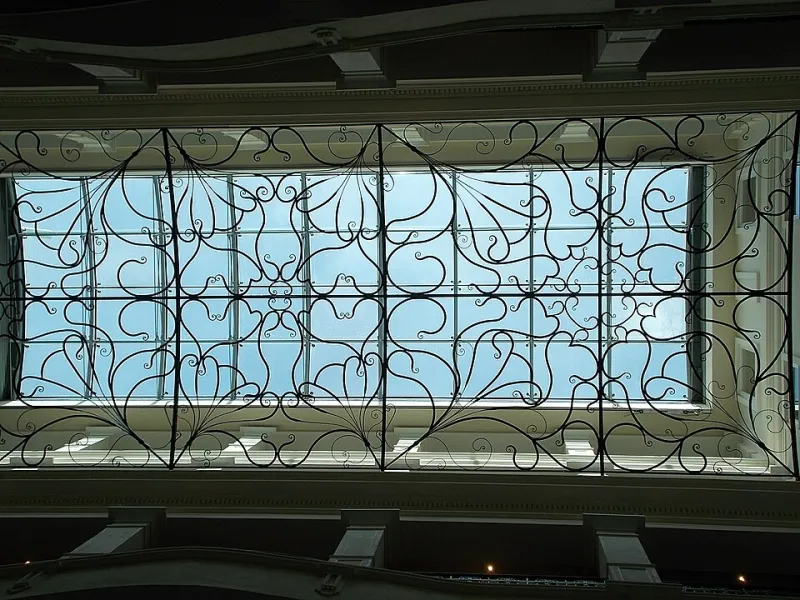
Photo: Globetrotter19, CC BY-SA 3.0, via Wikimedia Commons
The moment a prospective buyer steps across the threshold of a truly exceptional estate, the experience that follows in the next three to five seconds will largely determine whether an offer materializes. Interior designers, luxury architects, and seasoned listing agents across the country agree on one point with remarkable consistency: nothing orchestrates that critical first impression more powerfully than the staircase.
For generations, the grand staircase served a purely ceremonial purpose in American high society—a stage upon which hosts could make entrances and guests could be received. Today, it has transcended social theater to become one of the most strategically significant architectural investments a property owner or developer can make. In the rarefied tier of multi-million-dollar listings, a show-stopping staircase no longer merely accompanies the home's value. In many instances, it actively creates it.
From Function to Fine Art: The Evolution of the Residential Staircase
The trajectory from utilitarian structure to sculptural centerpiece has accelerated considerably over the past two decades. During the post-2008 recovery, when luxury construction resumed with renewed ambition, architects and interior designers began treating the staircase as a primary design brief rather than an afterthought. The shift was both aesthetic and economic.
In properties listed above $10 million across markets such as Beverly Hills, Palm Beach, the Hamptons, and Nashville's Forest Hills corridor, staircases crafted from materials including Calacatta marble, hand-planed white oak, and blackened steel have become standard conversation points in listing presentations. These are not incidental flourishes. They are calculated architectural investments that agents and appraisers increasingly factor into comparative market analyses.
Luxury architects who specialize in bespoke residential commissions note that clients now arrive at initial consultations with staircase inspiration boards as a matter of course. The conversation has moved decisively upstream. Buyers are no longer accepting what a developer provides; they are commissioning what their vision demands.
The Geometry of Grandeur: Design Approaches That Define Today's Market
Several distinct staircase typologies dominate the current luxury landscape, each carrying its own architectural language and market positioning.
The Floating Cantilevered Stair remains among the most sought-after configurations in contemporary estate design. Individual treads—often fashioned from three-inch-thick slabs of book-matched stone or solid hardwood—appear to project from a single structural wall with no visible means of support. The effect is one of breathtaking weightlessness, particularly when paired with floor-to-ceiling glazing that floods the form with natural light. Properties featuring this design in markets such as Malibu and Miami's Coconut Grove have consistently commanded premiums of eight to fifteen percent above comparable listings, according to recent transactional data reviewed by Château Chandler.
The Curved Double Staircase, a form with deep roots in American Gilded Age architecture, has experienced a sophisticated renaissance. Contemporary interpretations retain the symmetrical grandeur of their historical predecessors while incorporating modern materials and refined proportions. In estates across Greenwich, Connecticut, and Atlanta's Buckhead neighborhood, curved staircases sweeping upward from a central rotunda have become signature elements that appear prominently in listing photography, marketing videos, and editorial features—generating measurable organic interest among qualified buyers before a formal showing is ever scheduled.
The Sculptural Single-Run Helix represents perhaps the most architecturally daring choice. A continuous spiral or helical form ascending through two or more stories, often enclosed within a custom glass shaft, transforms vertical circulation into pure kinetic sculpture. These installations, which can require engineering collaboration across structural, mechanical, and artistic disciplines, are increasingly commissioned in properties positioned at the very apex of their respective markets.
Materials as Message: What the Staircase Communicates to the Discerning Buyer
Beyond geometry, material selection communicates volumes about a property's overall character and the caliber of its construction. In estates positioned at the highest price points, material provenance matters as much as appearance.
Italian marble sourced from quarries in Carrara or Statuario carries an immediate cultural authority that resonates with internationally minded buyers. Hand-forged wrought iron balusters, crafted by artisan metalworkers in studios across the American South and Mid-Atlantic, signal a commitment to craft that machine-produced alternatives simply cannot replicate. Wide-plank reclaimed oak—particularly material salvaged from pre-Civil War structures—introduces a narrative dimension that appeals to buyers who view their estate as an expression of historical continuity as much as contemporary luxury.
The interplay between materials is equally significant. A staircase that pairs cool Nero Marquina marble treads with warm brass handrail hardware and bleached oak risers creates a visual tension that rewards prolonged observation. It is this quality—the sense that the architecture repays attention—that luxury buyers with sophisticated palates find genuinely compelling.
The Appraisal Argument: Quantifying Architectural Drama
Skeptics occasionally question whether aesthetic investments of this magnitude translate reliably into appraised value. The evidence, while inherently anecdotal given the bespoke nature of ultra-luxury transactions, is nonetheless persuasive.
Listing agents who specialize in properties above $5 million consistently report that exceptional staircases generate disproportionate engagement in digital listing presentations. Properties featuring dramatic entryway staircases tend to accumulate significantly more saved searches, virtual tour completions, and private showing requests than comparable properties without such features. In a market segment where qualified buyer pools are inherently limited, that differential in engagement can be the decisive factor in achieving a timely sale at asking price.
Appraisers working at the luxury tier acknowledge that while standardized valuation models struggle to isolate the contribution of individual architectural elements, the overall quality narrative that a statement staircase establishes does influence the final reconciliation of value. A property that presents with extraordinary architectural coherence—of which the staircase is often the most visible expression—simply appraises differently than one that does not.
Designing for Legacy: The Staircase as an Estate's Defining Memory
Perhaps the most compelling argument for investing in architectural drama at the point of entry is the one that transcends pure economics. Buyers who acquire exceptional estates are not merely purchasing square footage or amenity packages. They are acquiring a setting for the experiences that will define their family's life—celebrations, gatherings, the quiet rituals of daily existence elevated by beautiful surroundings.
A staircase that stops conversation, that draws the eye upward, that changes subtly with the quality of morning light versus the warm glow of an evening reception—this is the element that guests remember, that children grow up describing, that photographs fail to fully capture. It is architecture in service of memory.
At Château Chandler, we have observed across countless exceptional properties that the estates which endure in the imagination long after a showing has concluded are invariably those where the architecture itself made an argument for the life being offered. The grand staircase, conceived with genuine artistic ambition, remains one of the most reliable instruments through which that argument is made.