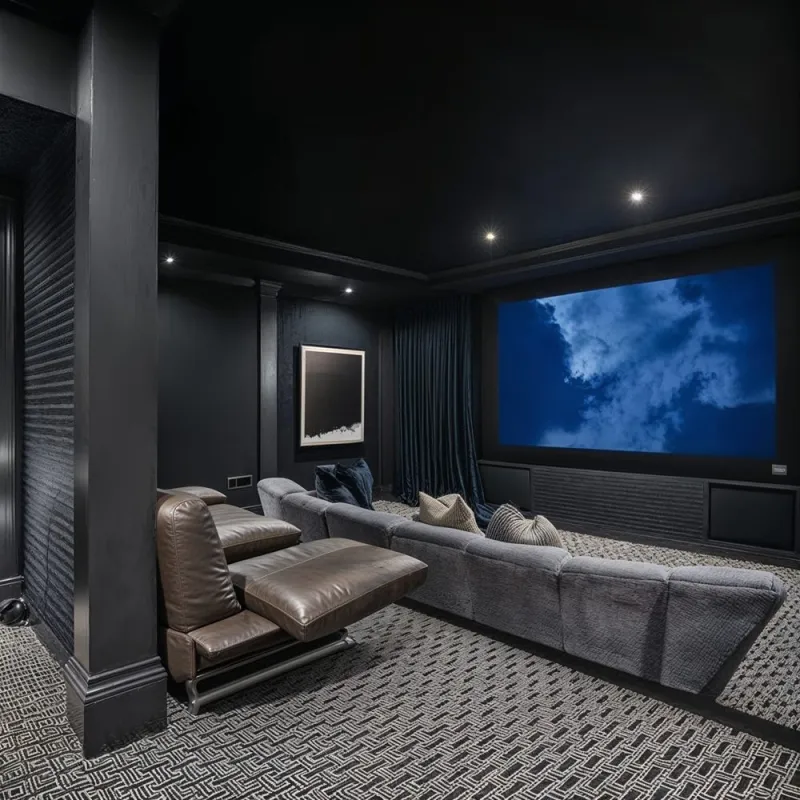
When the Curtain Rises at Home: The Rise of the Private Performance Estate
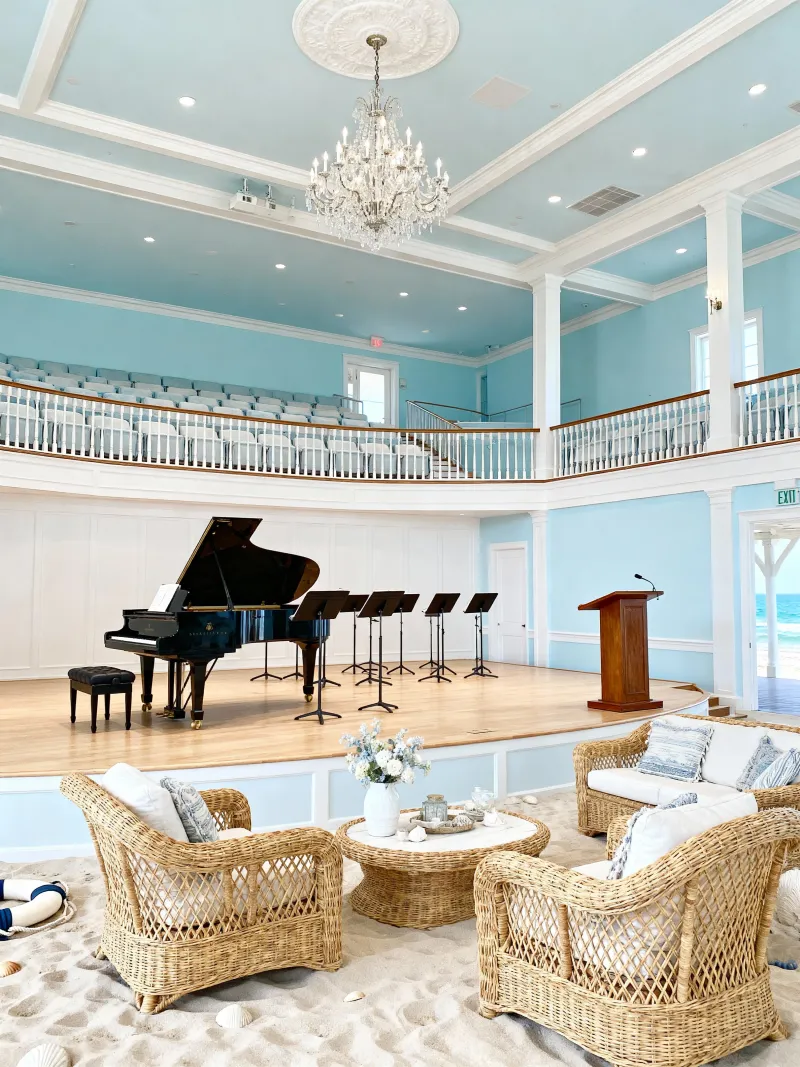
Photo: luxury private concert hall interior elegant residential performance space, via r2-us-west.interiorai.com
There is a particular kind of silence that precedes a great performance—an expectant hush, charged with possibility. In the grandest concert halls of New York, Chicago, and Los Angeles, that silence is the product of decades of acoustic refinement, architectural investment, and institutional vision. Increasingly, however, that same silence is being cultivated not in public venues, but within the private walls of America's most extraordinary estates.
Across the country, a select cohort of ultra-high-net-worth homeowners is commissioning performance spaces of genuine professional caliber—underground concert halls, recital rooms with variable acoustic systems, intimate chamber theaters, and dedicated rehearsal studios—all woven seamlessly into the residential fabric of their properties. These are not upgraded home theaters dressed in velvet. They are architecturally purposeful, acoustically sophisticated spaces designed to host string quartets, chamber orchestras, solo pianists, and avant-garde theatrical productions with the same fidelity one might expect from Carnegie Hall's Weill Recital Hall or the Hammer Museum's Billy Wilder Theater.
The phenomenon speaks to something larger than amenity accumulation. It reflects a fundamental shift in how a certain class of buyer understands the purpose of an estate—not as a retreat from culture, but as its most intimate expression.
Architecture in Service of the Muse
The design challenges inherent in building a performance-grade space within a private residence are considerable. Concert acoustics demand volume, surface geometry, and material composition that do not naturally coexist with the proportions of a home. A room that sounds magnificent for a Brahms sonata may render ordinary conversation cavernous and disorienting. The solution, according to architects who specialize in this increasingly rarefied discipline, lies in engineered flexibility.
Variable acoustic systems—mechanized panels, adjustable wall surfaces, and retractable diffusion elements—allow a single room to shift its sonic character depending on the nature of the performance. A space configured for an intimate jazz trio one evening can be recalibrated for a full chamber ensemble the next. These systems, once the exclusive province of professional recording studios and major concert venues, have been refined to the point where they can be installed with complete architectural discretion, concealed behind millwork, stone cladding, or bespoke fabric panels that read as pure interior design.
Beyond acoustics, the structural demands are significant. Performance spaces require isolation from the vibrational noise of HVAC systems, plumbing, and the ambient activity of the larger residence. Many of the finest examples are built as rooms-within-rooms—essentially floating structures, decoupled from the main building envelope on resilient mounts—a technique borrowed directly from professional studio construction. When these spaces are sited underground, as is increasingly common on estates where topography and privacy concerns favor subterranean programming, the engineering becomes more complex still, requiring careful attention to hydrology, load-bearing design, and the management of low-frequency resonance.
The Cultural Salon, Reimagined
The historical precedent for the private performance estate is, in fact, quite distinguished. The salons of nineteenth-century Europe—Chopin performing in Parisian drawing rooms, Schubert's legendary Schubertiads hosted in Viennese apartments—established the intimate private concert as one of the highest expressions of cultural patronage. America's Gilded Age followed suit, with figures such as Isabella Stewart Gardner transforming their residences into temples of art and music. What is unfolding today is, in many respects, a continuation of that tradition, elevated by contemporary technology and amplified by the extraordinary concentrations of private wealth that define the current era.
For collectors and patrons who have grown accustomed to supporting symphony orchestras, opera companies, and chamber music societies, the performance estate offers something that institutional venues cannot: total curatorial control. The program, the guest list, the sequence of works, the relationship between the music and the surrounding environment—all of it is within the owner's discretion. Artists are engaged not to fill seats, but to fulfill a vision.
Some of the most compelling examples in recent years have seen estates become genuine nodes in the cultural circuits of their regions. Composers have premiered new works in private concert halls before those pieces reached public stages. Emerging chamber ensembles have found sustained patronage through residency arrangements that provide rehearsal space, accommodation, and a recurring audience of deeply engaged listeners. The estate, in these instances, functions less as a home than as a privately endowed arts institution—one with an exceptionally comfortable green room.
Aesthetic Integrity Without Compromise
Perhaps the most demanding aspect of performance space design within a luxury residential context is the requirement that these spaces remain, above all else, beautiful. The acoustic imperatives of a professional venue—exposed concrete, perforated metal panels, industrial lighting grids—are fundamentally at odds with the aesthetic language of a great estate. Resolving this tension is where the finest architects in this field distinguish themselves.
The most successful performance interiors achieve their acoustic performance through materials that read as residential luxury: hand-plastered walls with concealed diffusion geometry, custom millwork incorporating hidden absorption panels, lighting systems that serve both theatrical and domestic functions, and flooring materials selected as much for their sonic properties as their visual character. Seating arrangements in the finest private concert halls often draw on the language of the great European opera house—tiered, intimate, upholstered in materials that contribute to the room's acoustic warmth—while maintaining the scale and proportion appropriate to a residence hosting forty guests rather than four hundred.
The integration of these spaces into the broader estate plan also demands careful consideration. Sightlines from the main house, the procession from entrance to performance hall, the relationship between the space and any adjacent gardens or terraces—all of these contribute to the sense of occasion that distinguishes a truly extraordinary performance estate from a merely expensive one.
A New Standard for the Discerning Buyer
For buyers at the highest tier of the market, the presence of a dedicated performance space is becoming an increasingly meaningful differentiator. It signals not only the financial capacity to commission such a space, but the cultural seriousness to have conceived of it—a distinction that resonates deeply within the social world these buyers inhabit.
At Château Chandler, we observe that estates offering genuine performance infrastructure—spaces designed with professional acoustic rigor and residential aesthetic grace—occupy a category of their own. They are not simply homes with exceptional amenities. They are the physical embodiment of a particular kind of life: one in which art is not attended but hosted, not consumed but commissioned, not admired from a distance but experienced with an intimacy that no public venue can replicate.
The curtain, in these remarkable residences, rises at the owner's pleasure. And that, for those who have spent a lifetime supporting the arts, may be the most extraordinary luxury of all.