Light as Architecture: How a Single Bespoke Fixture Is Redefining the Soul of the American Estate
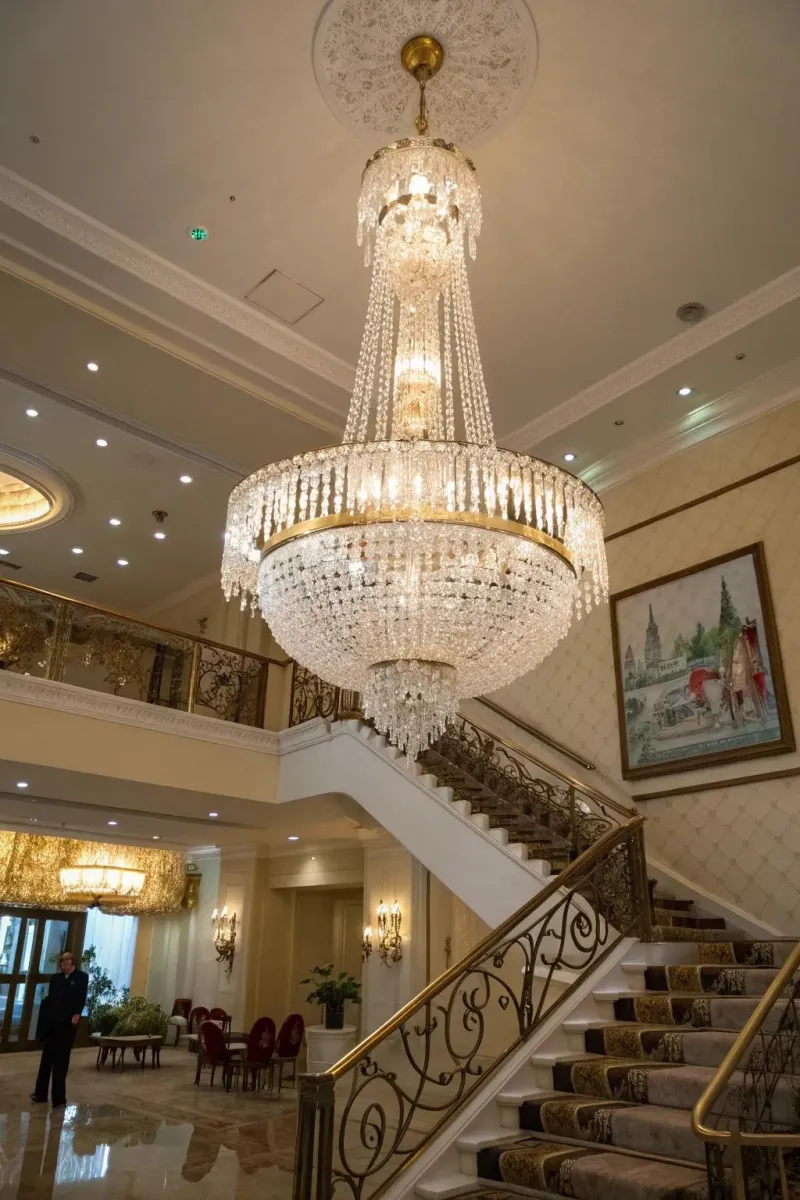
Photo: grand bespoke chandelier luxury estate foyer high ceiling dramatic lighting, via vervilla.com
There is a moment, well known to architects and interior designers who work at the uppermost register of the American residential market, when a client stops speaking about rooms and begins speaking about feeling. It is the moment when the conversation shifts from square footage and material palettes to something more elusive — the ineffable quality of light falling through a space, the way a single object suspended in air can transform an entire property from a collection of finely appointed rooms into something approaching a living work of art.
That moment, increasingly, revolves around one fixture.
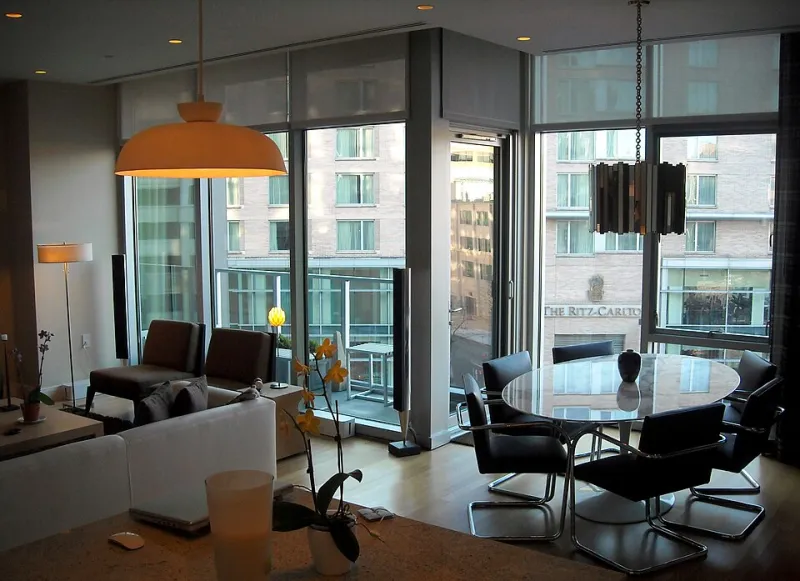
Across the country's most ambitious estates — from the rolling hills of Virginia horse country to the canyon-side retreats of Malibu, from the limestone-clad manors of Palm Beach to the glass-and-steel towers of Manhattan's most rarefied residential addresses — a quiet but unmistakable movement is underway. Ultra-luxury homeowners are commissioning bespoke lighting installations of extraordinary ambition, investing not in chandeliers as decorative accessories but as the architectural soul of their properties. These are not fixtures selected from a catalog. They are conceived, engineered, and fabricated as one-of-a-kind objects, often requiring years of collaboration between the homeowner, the architect, specialized artisans, and in many cases, fine-art studios more accustomed to gallery installations than residential commissions.
The Provenance Imperative
What distinguishes the most coveted lighting commissions of this era is not simply scale or material cost — though both are frequently staggering — but provenance. Today's most discerning buyers approach a bespoke chandelier with the same rigor they might apply to acquiring a significant painting or a piece of estate jewelry. They want to know the hands that shaped it, the lineage of the craft tradition it honors, and the singular story that no other fixture in the world can replicate.
This appetite for provenance has given rise to a remarkable ecosystem of artisans operating at the intersection of fine art and functional design. Glassblowers in the Venetian tradition, now working from studios in the Pacific Northwest and New England as well as their ancestral Murano workshops, are collaborating with American architects on commissions that can involve hundreds of individually hand-formed elements. Metalworkers trained in centuries-old forging techniques are producing armatures of blackened steel, patinated bronze, and hand-hammered gold leaf that read as sculpture before they are ever illuminated. Textile artists are weaving light-diffusing panels from silk and hand-spun linen that soften and scatter light in ways no manufactured component can replicate.
For the estate owner, the result is an object that carries not only visual authority but narrative weight — a fixture that can be discussed, documented, and ultimately passed to the next generation as a genuine heirloom.
The Architecture of Illumination
Perhaps the most significant shift in how these commissions are conceived is the growing insistence that the lighting installation be considered from the earliest stages of architectural design, rather than introduced as a finishing element. Leading residential architects report that clients are increasingly arriving at initial design conversations with a vision for their signature fixture already formed — and that the architecture of the home is then shaped, in part, to honor that vision.
This represents a meaningful inversion of the traditional design sequence. Where once a chandelier was selected to complement a completed foyer, today's most ambitious projects treat the fixture as a generator of spatial decisions. Ceiling heights are determined by the vertical sweep of a proposed installation. Staircase geometry is choreographed to offer the most compelling sightlines to a central piece. Skylights are positioned not simply for natural light but to create the ideal conditions under which an illuminated sculpture will be experienced at different hours of the day.
The practical consequences of this approach are evident in properties where a single lighting installation achieves a presence that extends far beyond its immediate location. A chandelier positioned at the heart of an open-plan residence can be perceived from the kitchen, the upper-level gallery, the guest suite corridor, and the terrace simultaneously — becoming, in effect, the visual anchor that unifies an entire floor plan.
Scale, Restraint, and the Art of Proportion
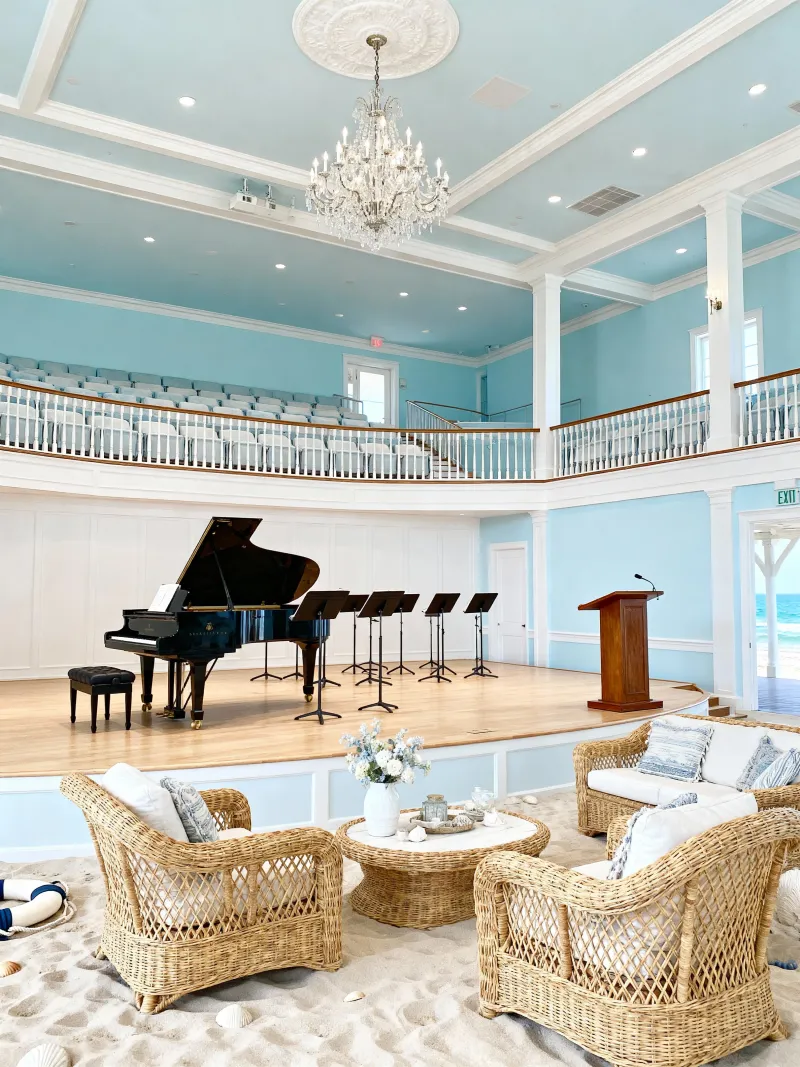
It would be a misconception to equate ambition in this arena solely with maximalism. Some of the most arresting lighting commissions currently defining America's finest estates are exercises in restraint as much as spectacle. A single sculptural pendant of extraordinary refinement, suspended at precisely the correct height above an antique dining table, can command as much attention as a cascading installation of a thousand hand-blown glass spheres. The determining factor is not scale but proportion — the calibrated relationship between the fixture, the space it inhabits, and the human beings who move through that space.
Architects and lighting designers who work at this level speak frequently of what they call the "moment of encounter" — the specific instant when a visitor first perceives the signature fixture and understands, on a visceral level, something essential about the character of the estate and the sensibility of its owner. Engineering that moment with precision requires an understanding of approach sequences, ceiling plane geometry, natural and artificial light layering, and the psychological effects of different material surfaces under varying illumination conditions.
It is, in short, a discipline as demanding as any other branch of residential design — and one that is receiving overdue recognition from the broader architectural community.
Investment, Legacy, and the Long View
For buyers navigating the upper tier of the American luxury residential market, the question of whether a bespoke lighting commission represents a sound investment is increasingly answered in the affirmative. Properties distinguished by a documented, one-of-a-kind installation from a recognized studio or artist have demonstrated the capacity to command meaningful premiums in sale negotiations, particularly when the provenance of the piece is well established and the commission is presented as an integral element of the property's architectural identity.
Beyond transactional considerations, however, the most compelling argument for the signature fixture is one of legacy. An estate is, at its most profound, a statement about what its owner values and how they have chosen to inhabit the world. A chandelier commissioned with the same seriousness brought to collecting fine art or supporting significant architecture is not merely a beautiful object. It is evidence of a particular quality of attention — a willingness to pursue excellence in a domain where shortcuts are easily taken and the difference between the merely expensive and the genuinely extraordinary is visible only to those who have cultivated the eye to perceive it.
At Château Chandler, we believe that distinction is worth pursuing with great care. The estates we celebrate are, without exception, defined by exactly that quality of attention — and there are few places where it is more luminously apparent than in the fixture that greets you the moment you cross the threshold.