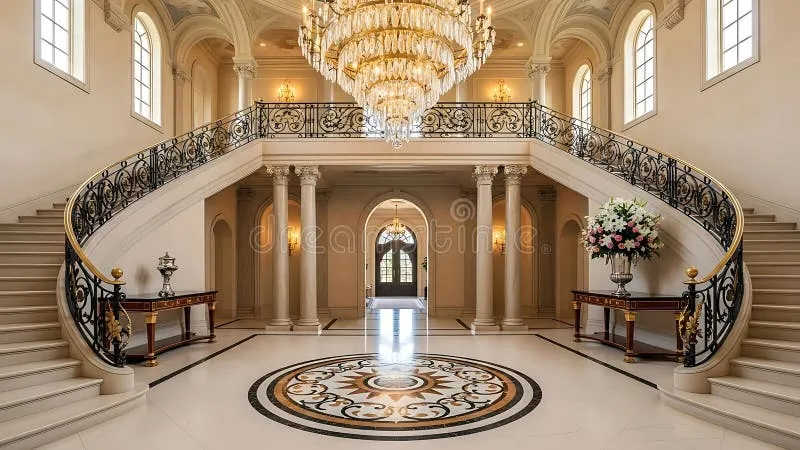
Where Every Stone Has a Story: The Rise of Material Provenance as the Ultimate Luxury Standard
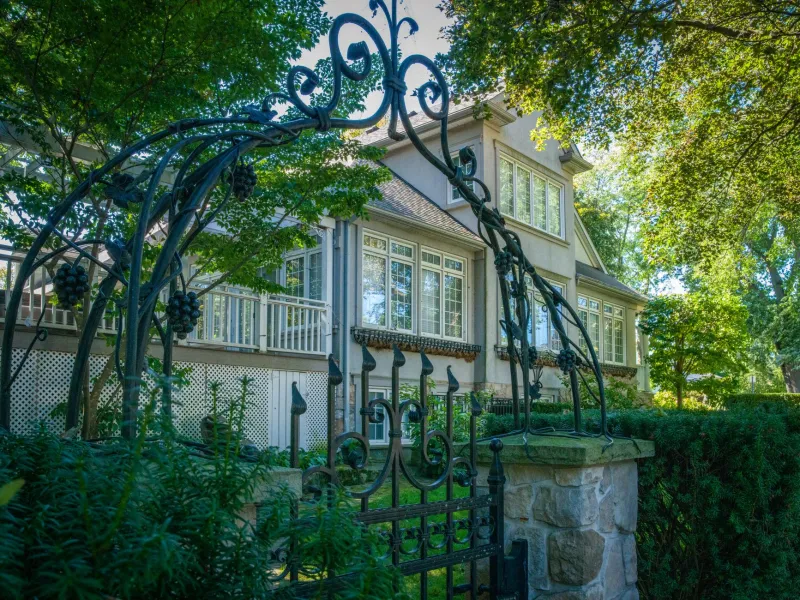
For generations, the prestige of a great American estate resided primarily in its address, its architect, and the sweep of its grounds. These remain consequential considerations. Yet among the country's most sophisticated buyers — those who approach the acquisition of a primary residence with the same rigor they apply to acquiring a Basquiat or a vintage Pétrus — a new and exacting standard has taken hold. The question is no longer merely what a home is made of. It is where those materials have been, who shaped them, and how long they have endured.
This is the provenance imperative, and it is quietly transforming the way America's finest estates are conceived, constructed, and ultimately valued.
The Material as Artifact
The concept of provenance is, of course, deeply familiar to collectors of art and antiquities. A painting's auction history, exhibition record, and chain of custody from studio to present owner directly inform its market value and cultural weight. What is relatively new — and what represents a genuine philosophical shift in residential architecture — is the application of this same framework to the physical fabric of a home itself.
Consider the reclaimed stone that now graces the entry hall of a recently completed estate in the Hudson Valley. The limestone in question was extracted from a decommissioned priory in Burgundy, its surfaces worn smooth by six centuries of foot traffic and candlelight. The estate's owners possess not merely the stone itself but a bound dossier: archival photographs of the priory, certificates of authenticity from a Paris-based architectural salvage house, and a geological provenance report confirming the material's regional origin. The stone is beautiful. Its history is priceless.
This kind of documentation — once considered an eccentric indulgence — has become an expectation among a growing cohort of ultra-high-net-worth buyers who understand that a home built from materials with verified histories occupies a category entirely apart from one assembled from commercially sourced equivalents, however fine those equivalents may be.
The Architecture of Accountability
Satisfying this demand requires a fundamental restructuring of how estates are designed and sourced. Traditional procurement chains — architect specifies, contractor sources, material arrives — are giving way to far more deliberate methodologies in which the search for specific materials begins as early as the conceptual design phase, sometimes years before ground is broken.
Specialist consultants now occupy a distinct niche in the luxury design ecosystem: individuals who function as material historians, traveling to reclamation yards in Tuscany, quarries in Vermont, and ironworks in the American Southwest to identify components with compelling lineage. Their work intersects with that of architects, interior designers, and occasionally museum conservators, producing a collaborative process that treats every surface, fixture, and structural element as a potential object of significance.
The hardware category is particularly instructive. Where a standard luxury residence might specify polished nickel or oil-rubbed bronze fittings from a high-end manufacturer, the provenance-conscious estate is more likely to commission work from an artisan blacksmith whose family has practiced the craft across multiple generations — and whose finished pieces arrive with a handwritten account of their making, the provenance of the iron stock used, and photographic documentation of the forge itself. Such pieces cost considerably more than their catalog counterparts. They are also, by any meaningful measure, incomparable to them.
The Material Library: A Room of Record
Perhaps the most striking physical manifestation of this movement is the emergence of the dedicated material library as a standard feature of the most ambitious estate projects. Analogous to the architectural archive that a serious collector might maintain for a significant artwork, these curated rooms — or, in larger compounds, entire wings — serve as the documentary heart of the property.
A well-appointed material library might contain sample panels of every stone, wood species, and metalwork used throughout the estate, each accompanied by its provenance documentation, geological or botanical analysis, and sourcing history. Shelving holds binders of correspondence with artisans, invoices from salvage houses, and first-edition catalogs from the workshops that supplied custom millwork or decorative plasterwork. In some cases, framed photographs of the original quarry face, the old-growth forest from which timber was harvested, or the hands of the craftsperson who shaped a particular element hang alongside the samples themselves.
For the estate's eventual sale, this archive is not incidental — it is integral. Sophisticated buyers and their advisors increasingly request access to material documentation as part of their due diligence process, treating it with the same seriousness as title records or engineering reports. An estate that can demonstrate the full genealogy of its physical components commands a premium that is difficult to quantify but impossible to ignore.
Investment Logic and Cultural Resonance
The financial case for provenance-driven construction is not merely theoretical. In an era when the most exceptional residential properties are evaluated by a global pool of buyers accustomed to the standards of European châteaux and historic American landmarks, the ability to demonstrate material authenticity functions as a powerful differentiator. Scarcity, verifiability, and historical depth are precisely the qualities that insulate trophy assets from market volatility — and these qualities are as applicable to a floor of hand-cut Carrara marble with a documented quarry history as they are to a signed sculpture by a recognized master.
There is also a cultural dimension that resonates with particular force among American buyers who have, in recent decades, developed an increasingly sophisticated appetite for authenticity. In a landscape saturated with high-quality reproduction and simulation, the irreplaceable weight of something genuinely old, genuinely handmade, and genuinely documented carries an emotional charge that no amount of technical excellence can replicate. To stand in a room whose materials have absorbed centuries of human experience is to inhabit a different order of space entirely.
A New Standard of Extraordinary
At Château Chandler, we have long understood that the estates worthy of serious consideration are those whose every element reflects a commitment to the exceptional. The provenance imperative extends this commitment to its logical conclusion: that a truly extraordinary home is not assembled but composed — from materials whose stories are as carefully chosen as their aesthetic qualities, and whose documentation ensures that those stories endure alongside the structures they define.
For the buyer who demands the very best, the question is no longer simply whether a home is beautiful. It is whether that beauty can be traced, verified, and understood — whether the home, in the fullest sense, knows where it comes from. In the most rarefied tier of American residential real estate, that knowledge has become indistinguishable from value itself.