The Return of the Unmediated: Why America's Most Sophisticated Estates Are Honoring the Ancient Alongside the Advanced
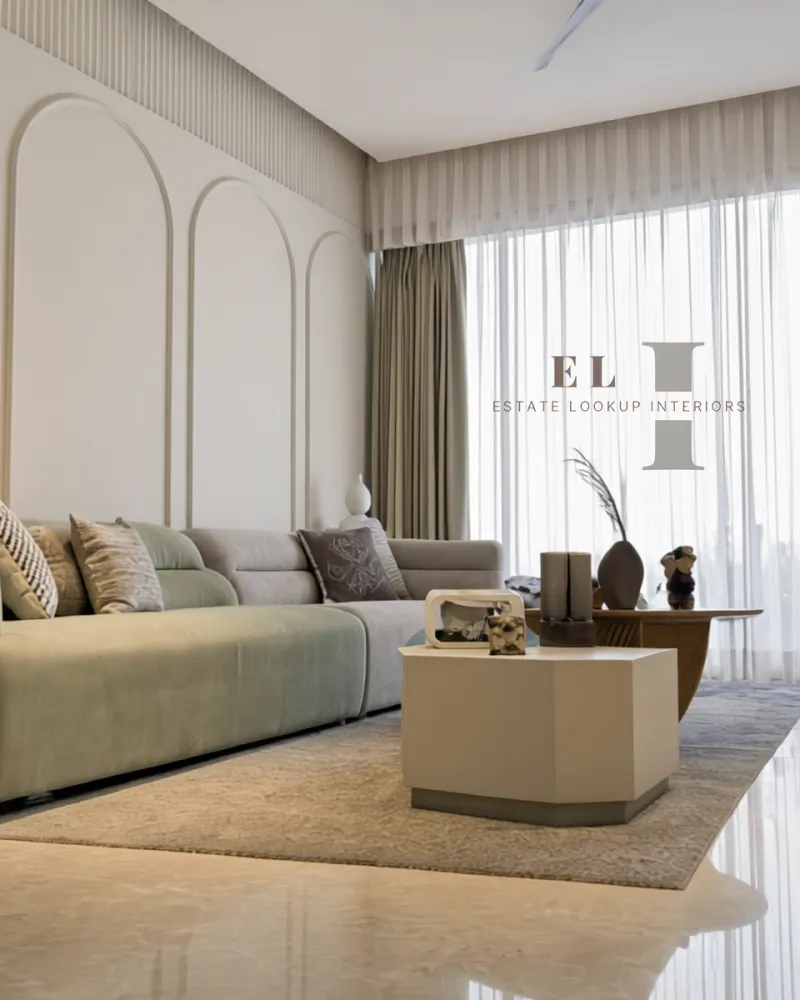
Photo: Estate Lookup Interiors, CC0, via Wikimedia Commons
There is a particular quality of light that no LED array, however artfully calibrated, has yet managed to replicate. It flickers. It recedes. It casts warmth in imperfect gradients across a room, and it invites the eye to rest rather than perform. It is, of course, the light of fire—and across America's most thoughtfully conceived estates, it is making a return that is anything but accidental.
The phenomenon unfolding in the country's finest residential properties is, at first glance, counterintuitive. These are homes where climate is managed invisibly, where security systems anticipate rather than react, where the infrastructure buried within walls and beneath floors represents some of the most sophisticated residential engineering ever deployed. And yet their owners—among the most discerning buyers in the American market—are increasingly insisting upon spaces that feel, above all else, human.
The Deliberate Architecture of Imperfection
To understand this movement, one must first set aside the assumption that analog elements represent a concession to sentiment over sophistication. In the most accomplished estates being designed and acquired today, the opposite is true. The inclusion of a hand-quarried limestone fireplace surround, a ceiling finished in traditional Italian lime wash, or a kitchen ventilated through a passive stack system is not a retreat from ambition. It is ambition of a different and arguably more demanding order.
"Clients at this level have already had the fully automated home," observes one prominent residential architect whose practice spans estates from the Hudson Valley to the coastal ranges of California. "What they are asking for now is the home that remembers how to be still."
That stillness is being achieved through a studied curation of pre-industrial materials and techniques—elements that carry within them a kind of sensory memory that no fabricated surface can convincingly manufacture. Rough-hewn oak beams sourced from reclaimed New England structures. Plaster walls applied by hand in multiple coats and left with the faint evidence of the artisan's touch. Wide-plank floors that expand and contract with the seasons, offering an almost imperceptible but deeply felt connection to the passage of time.
Fire as Feature, Not Footnote
Perhaps no element speaks more eloquently to this philosophy than the fireplace—or rather, the constellation of fireplaces—now being commissioned for America's premier estates. Where a previous generation of luxury homebuilding treated the hearth as a decorative gesture, today's most serious residential projects treat it as a structural anchor of the home's emotional life.
In newly constructed estates across Connecticut, Colorado, and the Pacific Northwest, primary hearths are being engineered for genuine, wood-burning use. The implications are significant: they require dedicated chimney infrastructure, careful orientation relative to prevailing winds, and sourcing relationships with suppliers of sustainably harvested hardwood. None of this is incidental. It is the product of owners who have decided that the ritual of building and tending a fire—its smell, its sound, its demand for attention—is worth the considerable investment required to do it properly.
Secondary fireplaces appear in libraries, primary suites, and, increasingly, in covered outdoor pavilions designed for year-round use. In each case, the message is consistent: this is a home that understands warmth as something more than a thermostat setting.
Natural Ventilation in the Age of Controlled Air
Equally instructive is the growing interest among elite buyers in passive and natural ventilation strategies—not as an energy-efficiency measure, though that benefit is welcome, but as a means of restoring the sensory relationship between interior and exterior that fully sealed, mechanically conditioned homes have quietly eliminated.
The finest new estates being developed across the American South, the mountain West, and the temperate coastal regions are increasingly incorporating operable clerestory windows, cross-ventilation corridors, and shaded breezeway passages that allow prevailing breezes to move through the home in the manner of a great Mediterranean villa or a well-sited antebellum plantation house. The mechanical systems remain—precise, capable, and entirely invisible—but they are designed to yield when nature offers something better.
This is, in essence, a hierarchy of preference: the natural is honored first, and the engineered stands ready to supplement. It is a philosophy that requires considerably more design intelligence than the alternative, and it produces interiors that feel, in the words of one estate owner interviewed for this feature, "like the house is actually alive."
Hand-Finished Surfaces and the Value of the Irreproducible
The hand-finished surface occupies a singular position in the grammar of contemporary luxury. In an era when nearly any material can be fabricated to extraordinary tolerances, the evidence of human craft—a slight variation in a tile glaze, the gentle undulation of a hand-plastered wall, the imprecise but purposeful texture of a stone floor laid by a master mason—carries a premium that no automated process can undercut.
America's most discerning estate buyers have understood this instinctively. They are commissioning custom millwork from ateliers that maintain waiting lists measured in years. They are sourcing hand-forged ironwork for balustrades and hardware from artisans whose techniques trace directly to pre-industrial traditions. They are engaging decorative plaster specialists trained in European fresco and scagliola techniques to finish rooms that will, quite literally, improve with age.
The financial logic, for buyers at this level, is secondary to the experiential one. These surfaces are not merely beautiful; they are specific. They cannot be replicated. They belong, in a way that no manufactured element can, to the particular home in which they reside.
The Invisible Infrastructure Beneath
What makes this philosophical stance genuinely remarkable—and distinguishes it from simple nostalgia—is what lies beneath the analog surface. The estates described here are not rustic retreats or studied exercises in primitivism. Their mechanical, electrical, and technological infrastructure is, without exception, state-of-the-art.
Fiber optic networks run beneath those wide-plank floors. Radiant heating systems warm the hand-laid stone. The hand-plastered walls conceal acoustic insulation rated to concert-hall standards. The very fireplaces that burn real wood are equipped with heat-recovery systems that capture and redistribute warmth throughout the home's conditioning zones.
The intention is not to escape technology but to subordinate it—to ensure that it serves the human experience rather than defines it. The home knows, at every moment, the temperature of every room, the air quality of every corridor, and the security status of every threshold. It simply does not announce these facts. It attends to them quietly, making possible the singular experience of inhabiting a space that feels, above all, like a refuge from the mediated world.
A New Definition of Luxury
What this movement ultimately represents is a maturation of the American luxury estate—a graduation from the demonstration of capability to the cultivation of meaning. The home that impresses through the sheer accumulation of features has given way to the home that moves through the integrity of its experience.
For buyers who have, in many cases, owned properties of considerable technological sophistication, the estate that offers the crackle of a genuine fire, the smell of lime plaster curing in a new room, and the sensation of a summer breeze moving through an intelligently designed corridor represents something genuinely rare: the feeling of having arrived, not merely at a destination, but at a state of being.
At Château Chandler, we regard this evolution not as a trend but as a signal—a clarification of what the finest residential properties in America are, at their most essential, meant to provide.