One Estate to Rule Them All: The Rise of the All-Encompassing Compound
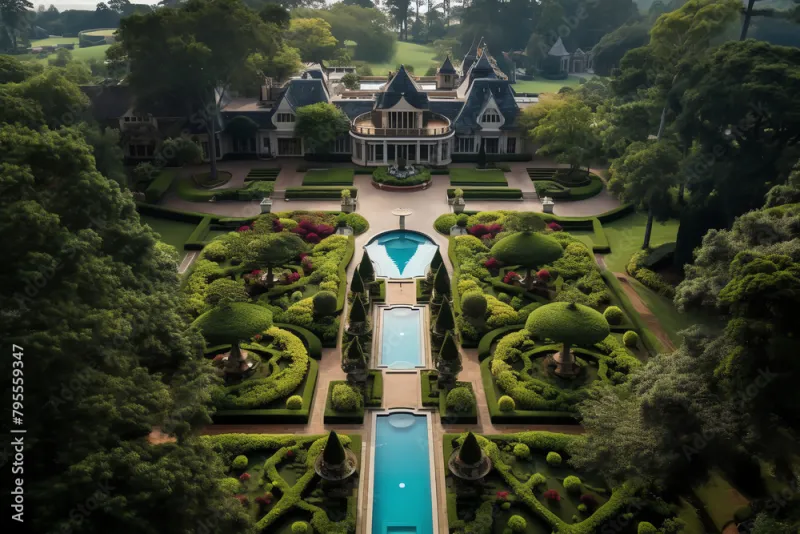
Photo: luxury mega estate compound aerial view sprawling private grounds helicopter pad amenities, via as2.ftcdn.net
For the better part of three decades, the aspirational model for ultra-high-net-worth real estate ownership followed a recognizable pattern. A primary residence in a major metropolitan area—New York, Los Angeles, Chicago, or Miami. A ski property in Aspen or Park City. A summer compound on the coast of Maine, the Hamptons, or Martha's Vineyard. Perhaps a winter retreat in Palm Beach or Scottsdale. Each property served a season, a mood, a social function.
That model is being dismantled. Quietly, methodically, and with considerable financial intention, a growing number of America's most sophisticated buyers are collapsing the multi-property portfolio into a single, exhaustively programmed estate—a compound designed not merely to serve as a primary residence but to eliminate the practical need for any other.
The implications for the luxury real estate market are significant, and for buyers currently navigating this landscape, the shift merits close examination.
The Pandemic as Proof of Concept
No single event accelerated this consolidation more decisively than the COVID-19 pandemic. When extended periods of restricted movement became the reality for even the most globally mobile households, the limitations of the multi-property model became impossible to ignore.
Families discovered that their primary residences—often urban penthouses or suburban estates optimized for social entertaining rather than sustained daily living—were poorly equipped for months of continuous occupation. Meanwhile, secondary properties that had been purchased for leisure lacked the infrastructure, staff accommodations, technology systems, and workspace capabilities required for full-time habitation.
The lesson absorbed by a significant cohort of ultra-high-net-worth buyers was direct: no single property in their portfolio had been designed to be everything. The pandemic made clear that designing for everything was not an extravagance—it was a practical necessity.
What followed, in the years since, has been a sustained reorientation of luxury real estate demand toward what the industry has come to call the everything estate.
Defining the Everything Estate
The everything estate is not simply a large home. Size, while relevant, is secondary to programmatic comprehensiveness. The defining characteristic of this property type is its capacity to absorb every function that might otherwise require a secondary property or a commercial facility.
In practice, this means something considerably more ambitious than an extra bedroom wing or an expanded pool house. The estates being commissioned and acquired by buyers in this category typically incorporate:
Full resort-grade wellness infrastructure. Spa facilities, hydrotherapy pools, cold plunge installations, infrared sauna suites, and dedicated fitness studios staffed by retained wellness professionals. The gym membership, the spa day, the wellness retreat—all rendered unnecessary by the property itself.
Private aviation integration. This feature, more than almost any other, distinguishes the true everything estate from its merely expansive counterparts. Properties offering on-site or immediately adjacent helicopter landing facilities, and in some cases private airstrip access, have moved from novelty to near-requirement for buyers at the highest tier. The ability to depart and return without navigating commercial or even private terminal infrastructure is not a convenience—it is a structural feature that determines how the property functions in daily life. Brokers active in markets such as central Montana, the Texas Hill Country, and coastal North Carolina report that aviation access has become a threshold criterion, not a preference.
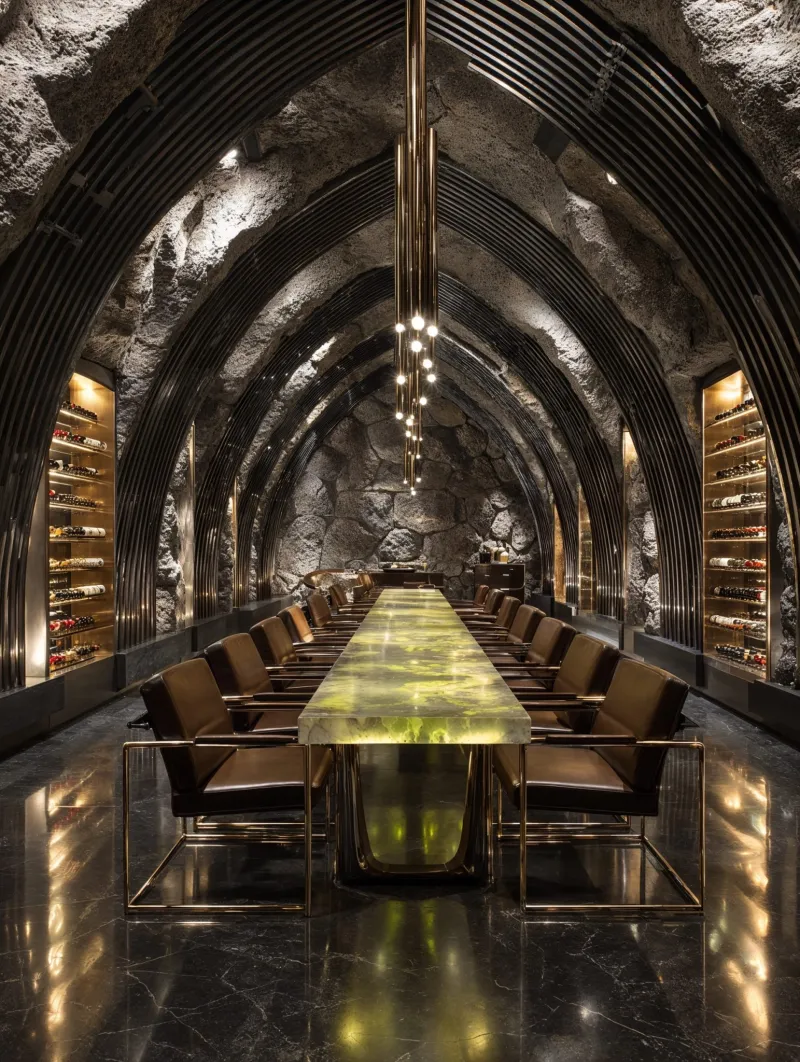
Entertainment and hospitality capabilities at scale. Screening rooms, chef's kitchens designed for catering-volume output, wine cellars with professional storage and tasting room adjacency, and dedicated guest wings with independent entrance sequences that allow the property to host at the level of a boutique hotel while maintaining residential privacy for the primary household.
Professional-grade workspace and communications infrastructure. The remote-work revolution did not end for the ultra-wealthy when offices reopened. Many buyers in this category have restructured their professional lives around the assumption of geographic flexibility, and their estates must support that flexibility without compromise. Dedicated executive office suites, conference facilities, broadcast-quality video infrastructure, and redundant communications systems are now standard specifications in this property category.
The Financial Logic of Consolidation
Beyond lifestyle considerations, the economics of consolidation are increasingly compelling. Carrying multiple high-value properties across different jurisdictions entails not merely mortgage or capital costs but a multiplying array of ongoing obligations: property taxes, insurance premiums, maintenance staff, property management fees, and the carrying costs associated with properties that may sit unoccupied for significant portions of the year.
Consolidating those resources into a single, superlatively equipped compound concentrates both capital and operational expenditure. The result, for many buyers who have undertaken the analysis, is a property that costs more in absolute terms but less in aggregate than the portfolio it replaces—while delivering a materially superior living experience.
There is also the matter of asset clarity. A single exceptional estate, properly acquired and maintained, tends to appreciate with greater predictability than a dispersed portfolio of properties subject to varying local market dynamics. For buyers whose advisors are engaged in holistic wealth management, the everything estate increasingly presents as the more coherent long-term holding.
How Developers Are Responding
The development community has not been slow to recognize this shift. Across the country, a new generation of luxury residential developers is designing properties from the ground up around the everything estate concept, anticipating buyer requirements rather than retrofitting them.
In markets stretching from the mountain West to the Southeast, large-acreage developments are being master-planned with private aviation infrastructure, integrated wellness campuses, and flexible residential configurations that can accommodate multigenerational households, staff, and guests within a single, coherently designed compound. The emphasis is consistently on self-sufficiency: the property that requires its owners to leave it as rarely as possible, and that rewards extended occupation with an experience that deepens rather than diminishes over time.
A New Standard for Exceptional Living
At Château Chandler, we have observed this consolidation trend with considerable attention, and we believe it reflects something meaningful about where luxury living in America is genuinely headed. The buyers driving this shift are not simplifying their lives—they are intensifying them, concentrating their investment in a single environment of extraordinary quality rather than distributing it across a collection of properties that serve their purposes imperfectly.
For buyers currently evaluating their real estate strategies, the everything estate deserves serious consideration—not as an indulgence but as an architectural and financial thesis about how exceptional living is most intelligently pursued.
The question, for those prepared to ask it, is no longer how many properties one should own. It is what a single, extraordinary property should be capable of.