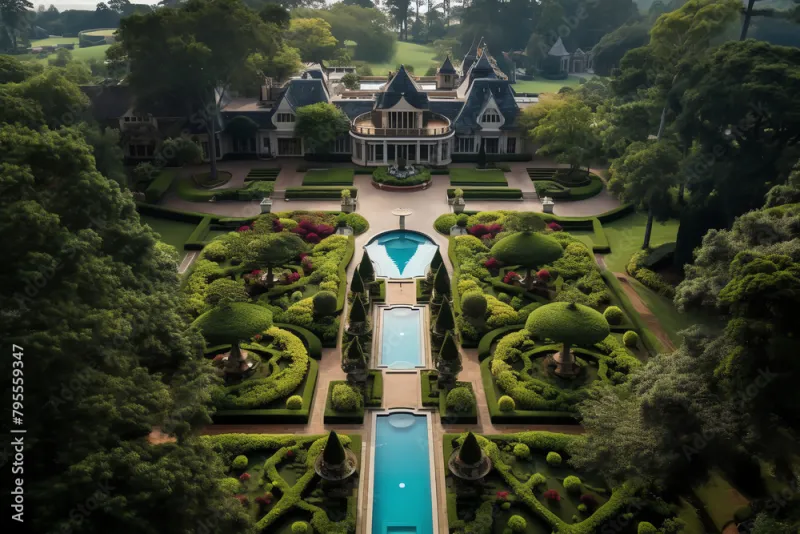
Rooted in Place: The New Philosophy of Estates That Honor Their Land
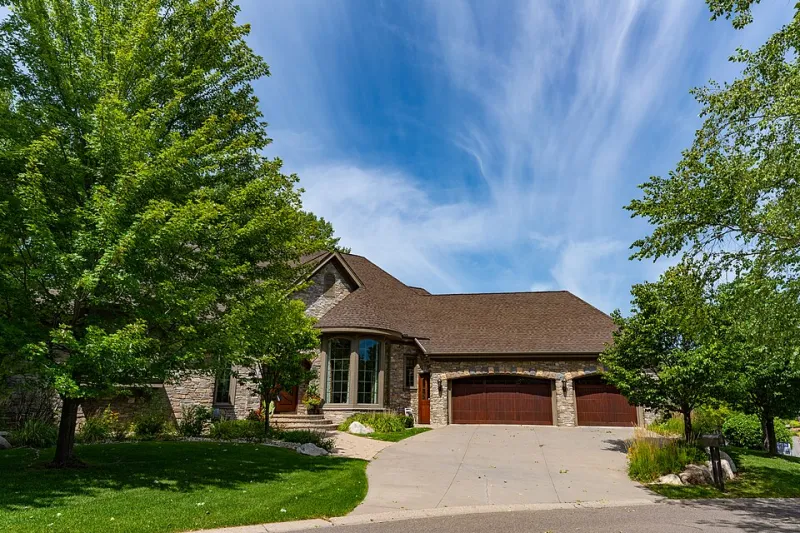
Photo: Tony Webster, CC BY 2.0, via Wikimedia Commons
For much of the twentieth century, the great American estate announced itself. Approached along a sweeping drive, framed against manicured grounds, it rose from the landscape with deliberate authority—a declaration of arrival, of permanence, of distinction. The house was the statement. The land was its setting.
That relationship has quietly, and rather profoundly, reversed.
Among the country's most sophisticated buyers and the architects they commission, a new standard has taken hold: the estate that does not impose upon its site, but emerges from it. Not a monument placed upon the land, but a composition woven into it. The shift is philosophical as much as aesthetic, and understanding it illuminates some of the most remarkable residential design being produced in America today.
The Case Against Dominance
The impulse toward contextual restraint did not arise in a vacuum. It reflects a broader evolution in how ultra-high-net-worth buyers conceive of their relationship with the natural world—and with privacy. An estate that announces itself from the road is, by definition, a visible one. An estate that recedes, that borrows the colors and textures of its surroundings, that follows the topography rather than interrupting it, achieves something far more rare: genuine seclusion.
There is also the matter of permanence. Materials and forms that harmonize with a specific landscape tend to age with extraordinary grace. A home clad in locally quarried limestone in the Hill Country of Texas, or in weathered cedar shingle along the Maine coast, does not fight its environment. It participates in it, deepening in character with every passing season rather than struggling to maintain an appearance of pristine contrast.
Buyers at the highest tier of the market are increasingly attuned to this distinction. They are not seeking novelty for its own sake; they are seeking estates that feel, from the very first approach, as though they belong precisely where they stand.
What Biophilic Design Actually Means at This Scale
The term "biophilic design" has become something of a watchword in luxury real estate, deployed so frequently that it risks losing its meaning. At its most serious application, however, it describes something genuinely transformative: an architectural approach in which the distinction between interior and exterior is systematically dissolved.
In practice, this means far more than large windows. It means that the palette of interior materials—stone, wood, plaster—echoes the materials of the site itself. It means that sightlines are choreographed to frame specific views of the landscape as deliberately as a curator frames a painting. It means that water features, garden rooms, and covered outdoor living spaces are not appended to the house but integrated into its plan, so that moving through the home is inseparable from moving through the land.
Some of the most celebrated recent estates in markets such as Montecito, California, and the Adirondacks of upstate New York have carried this principle to its logical conclusion: the rooflines follow the grade of the hillside; the structural columns are clad in the same moss-covered stone that appears naturally on the property; interior courtyards bring the sky—and the sound of wind, birdsong, and rain—into the heart of the home.
The Material Palette of Contextual Architecture
For buyers evaluating estates built according to this philosophy, the material palette is the most immediate signal of authenticity. Contextual design does not reach for contrast or novelty; it reaches for resonance.
In the desert Southwest, this means rammed earth walls and corten steel that oxidizes to the precise amber of the surrounding mesa. In the Pacific Northwest, it means Douglas fir, rough-sawn basalt, and glass that reflects the dense green of the surrounding forest back upon itself. In the limestone country of central Texas, it means walls that appear to have been assembled from the same geological material that breaks the surface of the surrounding fields—because, in the best cases, they have been.
This regionalism is not nostalgic or vernacular in the conventional sense. The homes being produced by the leading firms working in this mode are thoroughly contemporary in their spatial logic, their technology, and their amenities. What distinguishes them is a commitment to specificity: they could not exist anywhere else, and they would not wish to.
Site Planning as the Primary Design Act
Perhaps the most significant insight for buyers approaching this category of estate is that the most consequential design decisions are made not at the drafting table, but on the land itself. Before a single wall is proposed, the finest contextual architects spend extended time on site—observing the movement of light across the property through different seasons, mapping prevailing winds, identifying the natural drainage patterns that will determine where hardscape can exist without disrupting the hydrology of the land.
This process—unhurried, attentive, deeply site-specific—is what produces the quality that buyers most often struggle to articulate but immediately recognize: the sense that a home has not been placed on its land, but discovered within it.
Recognizing Genuine Contextual Design
For buyers conducting due diligence on an estate presented in these terms, several indicators distinguish genuine contextual design from its more superficial imitations. First, examine the relationship between the home's footprint and the natural topography: does the structure follow the land's natural contours, or has the site been significantly graded to accommodate a predetermined form? Second, consider the material provenance: are the primary cladding materials sourced regionally, and do they appear in their natural, unprocessed state? Third, assess the view corridors: are they deliberate and specific, or generic?
Finally—and most revealingly—observe how the estate reads from a distance. The homes that most completely achieve this philosophy are, in the truest sense, difficult to see. They do not demand attention. They reward it, slowly and generously, to those willing to look closely enough.