Fixtures of Time: How the Bespoke Chandelier Becomes a Living Chronicle of Family Legacy
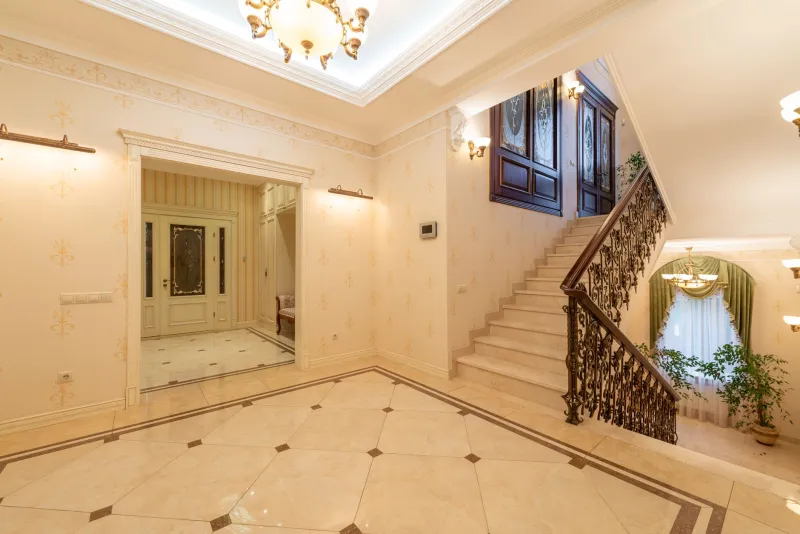
There is a particular kind of attention that visitors pay when they enter a great hall and encounter a chandelier that does not quite match the architecture surrounding it. The ceiling moldings speak in the measured grammar of Federal-period classicism; the fixture itself answers in something altogether more modern—perhaps a cascade of hand-blown borosilicate glass commissioned in the 1970s, or a sculptural armature of oxidized brass that clearly belongs to this century. Rather than representing a failure of curatorial judgment, such a pairing is often the most deliberate decision an estate family ever makes. It is, in the truest sense, an act of annotation.
Across America's most storied private estates—from the bluegrass country of Kentucky to the wooded hillsides of Connecticut, from the Santa Barbara Riviera to the low-country plantations of South Carolina—discerning families have long understood that a bespoke lighting commission carries weight beyond the aesthetic. It marks a moment. It declares a stewardship. It insists, quietly but unmistakably, that this generation was here, and that it cared.
The Generational Logic of Recommissioning
The impulse to commission a new chandelier upon inheriting or significantly renovating a family estate is neither vanity nor restlessness. It is, in the language of architectural historians, a form of temporal punctuation—a way of separating one era of an estate's life from the next without erasing what came before.
Consider the typical arc of a multigenerational American estate. A founding generation builds with conviction, selecting fixtures that reflect the prevailing taste of their moment: perhaps the ornate gas-converted crystal chandeliers of the Gilded Age, or the geometric bronze forms that entered fashionable interiors during the 1920s. A second generation inherits both the home and its visual vocabulary. If they are wise—and the most distinguished families invariably are—they do not rush to replace what their predecessors chose. They live alongside it. They learn its grammar. And then, when the time comes, they introduce something new: a commission that speaks in a contemporary register while remaining in respectful conversation with what preceded it.
This layering of taste across time is precisely what separates a great estate from a merely expensive one. The former tells a story; the latter simply displays a balance sheet.
The Atelier Relationship as Archival Practice
The families most committed to this philosophy of lighting as legacy tend to cultivate long relationships with individual ateliers or master artisans—partnerships that themselves span decades and occasionally generations. The atelier becomes, in effect, a co-author of the estate's visual history.
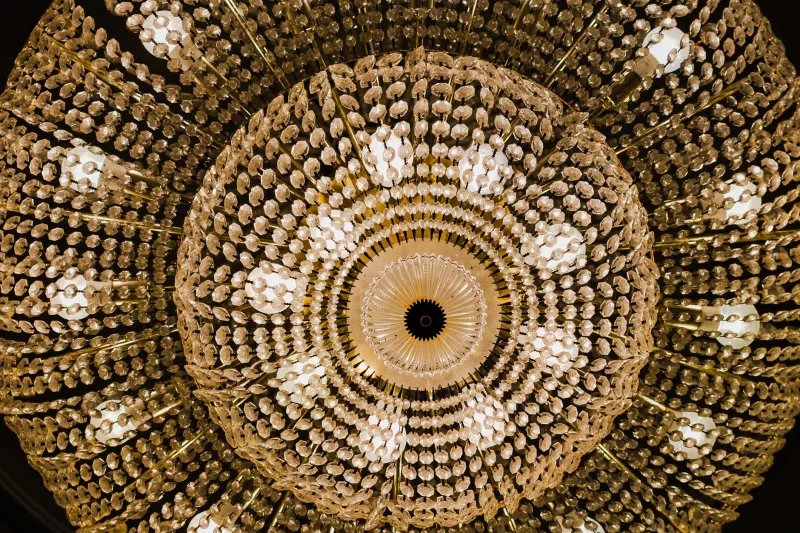
These relationships carry a documentary richness that purely transactional commissions cannot replicate. An atelier that has worked with a family across thirty years accumulates an understanding of the estate's spatial proportions, its dominant material palette, the quality of its natural light at different hours and seasons, and—perhaps most valuably—the temperament of successive family members who have served as its custodians. When a new commission is eventually undertaken, that accumulated knowledge informs every design decision: the scale of the armature, the density of the crystal drops, the warmth or coolness of the light source, the degree to which the new fixture departs from or echoes its predecessors.
The result is not a collection of individual objects but a coherent visual dialogue conducted across time—an archive that happens to hang from the ceiling.
Reading the Room Across Decades
For the estate buyer with genuine historical sensibility, the presence of multiple lighting generations within a single property is among the most revealing indicators of a family's relationship to its own legacy. It suggests a continuity of engagement—an unwillingness to treat the estate as merely a backdrop for contemporary life, and an equal unwillingness to treat it as a museum in which nothing may change.
The most sophisticated estates achieve what might be called a productive tension between their lighting eras. A mid-century dining room chandelier of smoked glass and satin nickel—bold, spare, unmistakably of its moment—can coexist with an adjacent entry hall fixture of hand-wrought iron and beeswax candles that dates to the property's founding decade. Each makes the other more legible. Each tells you something not only about the aesthetic preferences of its commissioning generation but about the values that generation brought to the act of stewardship itself.
In this sense, a chandelier is not simply an object. It is an argument—a position taken on what matters, what endures, and what a family chooses to leave behind for those who come next.
The Commission as Declaration of Intent
For buyers entering the ultra-luxury market with the intention of establishing a multigenerational estate rather than simply acquiring a prestigious address, the question of lighting commission deserves early and serious consideration. The fixture you choose for the great room or the formal entrance gallery will, if the estate passes through your family as intended, be read by your grandchildren as an artifact of your moment—your taste, your values, your understanding of the house's architectural character.
This is not a burden; it is an invitation. The bespoke chandelier, more than almost any other single element within an estate's interior, offers the commissioning owner an opportunity to participate in a conversation that will outlast them. The choice of material—whether rock crystal or hand-blown glass, gilded bronze or blackened steel—communicates something about the owner's relationship to tradition. The choice of scale communicates something about their confidence. The choice of light source and intensity communicates something about their understanding of how a room ought to feel when occupied by people who matter to one another.
Taken together, these decisions constitute a kind of statement—not merely about interior design, but about the kind of family this estate is meant to shelter and the kind of legacy it is meant to carry forward.
The Fixture That Outlives Its Commissioner
There is a particular dignity in the chandelier that has outlived the hand that commissioned it. Walk through the great estates of the American Northeast—those that have remained in single-family ownership across four or five generations—and you will encounter fixtures that carry within them the ambitions and sensibilities of people long departed. A Tiffany Studios commission from 1904. A Venini glass installation acquired during a postwar sojourn in Venice. A quietly revolutionary American studio piece from the early 1980s, when a younger generation made its first confident assertion of its own aesthetic identity.
Each of these is, in the most literal sense, a record. Together, they constitute something rarer and more valuable than any single masterwork: a timeline of a family's interior life, suspended in light, marking the passage of time with every illuminated evening.
At Château Chandler, we believe that the estates most worthy of exceptional buyers are precisely those in which time has left its mark with this kind of intentionality—where every fixture, from the oldest to the most recent, reflects not accident but care, not trend but conviction, not expenditure but genuine investment in the enduring idea of home.