Masters of Illumination: The Bespoke Lighting Ateliers Shaping America's Greatest Estates

Photo by Photo by Clément Philippe on Unsplash on Unsplash
There is a moment, early in the commissioning process, when a lighting artisan and an estate owner stop discussing specifications and begin speaking the same language. It is the moment a fixture ceases to be a product and becomes a portrait — a luminous declaration of who lives beneath its glow. For the handful of master craftspeople who occupy the rarefied upper tier of American bespoke lighting, that moment is not merely the beginning of a project. It is the beginning of a relationship.
Across studios in New York, Los Angeles, Charleston, and the rural workshops of New England, a quiet renaissance is underway. The most discerning estate owners in the country are no longer content with even the finest production chandeliers. They seek something irreplaceable — a fixture conceived, designed, and assembled by human hands, informed by an intimate understanding of the space it will inhabit and the life that will unfold beneath it.
The Atelier as Creative Sanctum
Step inside one of these studios and the distinction from a conventional lighting showroom becomes immediately apparent. There are no gleaming floor samples arranged for passive admiration. Instead, one encounters drafting tables layered with hand-rendered elevations, shelves of raw crystal and hand-blown glass in various states of transformation, and the faint, satisfying scent of metalwork in progress. These are working environments shaped by intention — spaces where the creative process is as visible as the finished object.
The artisans who lead these ateliers are, by temperament and training, more akin to architects than manufacturers. Many hold formal degrees in fine art or industrial design; others apprenticed under European craftspeople before establishing American studios. What unites them is a conviction that a chandelier is not an accessory to a room but a primary architectural element — one that must be understood in three dimensions, in relation to ceiling height, natural light, wall materiality, and the human scale of those who will move beneath it.
"We never begin with the fixture," explains one prominent New York-based artisan whose commissions have graced estates from the Hamptons to Montecito. "We begin with the room, then the house, then the owner. By the time we put pencil to paper, we already know what the light needs to say."
The Commission: A Process Unlike Any Other
For those unacquainted with the world of bespoke lighting, the commissioning process can feel revelatory in its depth. An initial consultation rarely concerns itself with dimensions or materials. It is, more accurately, a conversation about life — how the estate's owners entertain, how they move through their home, what they value in the hours between dusk and midnight when artificial light becomes the primary author of atmosphere.
From these conversations, a lighting artisan begins to develop what many in the field call a "luminous brief" — a document that captures not technical requirements but emotional intentions. Should the fixture command attention from the moment one crosses the threshold, or should it reveal itself gradually, its full complexity only apparent upon closer inspection? Should it anchor the room with gravitas, or lift the eye upward with an almost weightless elegance? These are not trivial questions. They are the foundation upon which every subsequent decision rests.
The design phase that follows is iterative and unhurried. Preliminary sketches give way to detailed renderings, which in turn yield scale models — often constructed in the same materials as the final piece, allowing the client to assess the interplay of light and material under conditions that approximate the finished installation. Revisions are welcomed, not as setbacks, but as refinements. The finest ateliers regard the collaborative process as intrinsic to the work's ultimate quality.
Material Mastery and the Language of Craft
The materials from which these extraordinary fixtures are fashioned tell their own stories. Hand-blown Murano glass, sourced directly from Venetian furnaces with centuries of tradition behind them, remains among the most coveted elements in bespoke American lighting. Rock crystal — not its synthetic imitation but the genuine mineral harvested and cut to specification — commands a premium that reflects both its scarcity and its unparalleled refractive quality. Aged brass, hand-forged iron, and even reclaimed architectural bronze from demolished civic buildings have all found their way into singular commissions for estates whose owners prize historical resonance as deeply as visual splendor.
The fabrication process itself is a study in patience. A single arm of an elaborate chandelier may require dozens of hours of metalwork before it is ready to receive its glass or crystal elements. The assembly of a large-scale fixture can span weeks, with multiple artisans contributing their specialized expertise — the glassblower, the metalsmith, the electrician versed in the particular demands of high-voltage decorative systems, and the finishing specialist who ensures that every surface achieves its intended patina.
Trusted Collaborators in the Estate Design Ecosystem
What distinguishes the most sought-after lighting ateliers from their peers is not merely technical virtuosity, however formidable. It is the capacity to function as genuine creative partners within the broader estate design ecosystem. The finest lighting artisans maintain deep, ongoing relationships with the architects and interior designers who shape America's premier residences — relationships built on mutual respect and a shared commitment to the integrity of the whole.
This collaborative posture requires a particular kind of professional fluency. A lighting artisan working on a significant commission must be conversant in architectural drawing conventions, interior design vocabulary, and the practical realities of construction timelines. They must know when to advocate for their creative vision and when to subordinate it gracefully to the larger composition. The great ones, by all accounts, possess both the confidence of the artist and the humility of the craftsperson.
For estate owners, engaging directly with a lighting atelier — rather than delegating the decision entirely to a design team — can be among the most personally rewarding aspects of the building or renovation process. There is something profound about sitting across from the person who will create the object that illuminates your most formal gatherings, your most private evenings, the celebrations and the quiet hours that constitute a life well lived.
Light as Legacy
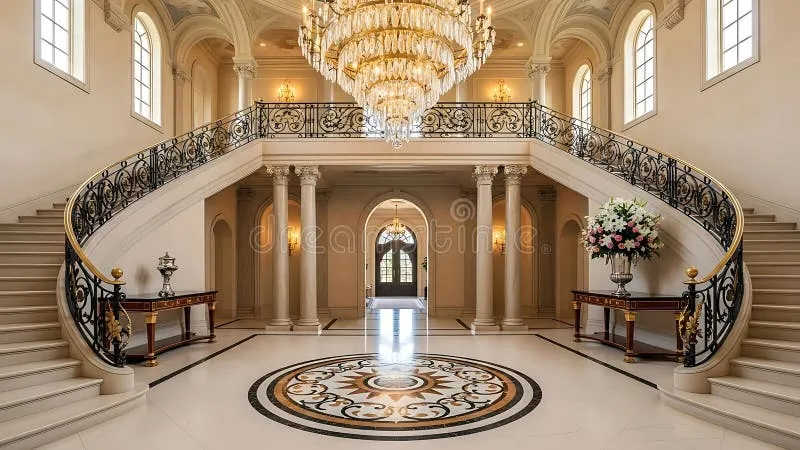
The finest bespoke chandeliers share something essential with the estates they inhabit: they are built not for a season but for generations. The artisans who create them are acutely aware of this dimension of their work. A fixture commissioned today may hang in that same entrance hall for a century, outlasting the fashions and trends that surrounded its creation, continuing to cast its particular quality of light over owners and occasions as yet unimagined.
This awareness of legacy informs every decision, from the selection of materials that will age beautifully rather than merely endure, to the engineering of mounting systems designed for the stresses of decades rather than years. Many ateliers maintain meticulous records of each commission — detailed documentation that allows for faithful restoration or replication long after the original craftspeople have retired.
In a marketplace saturated with objects that celebrate novelty above all, the bespoke lighting atelier stands as a compelling counterargument. Here, the ambition is not to surprise but to endure — to create something so precisely right for its place and its owner that the passage of time only deepens its meaning. For the estate that aspires to genuine distinction, there may be no more eloquent investment.