The Graceful Exit: How Forward-Thinking Architects Are Designing Elite Estates for Elegant Ownership Transitions
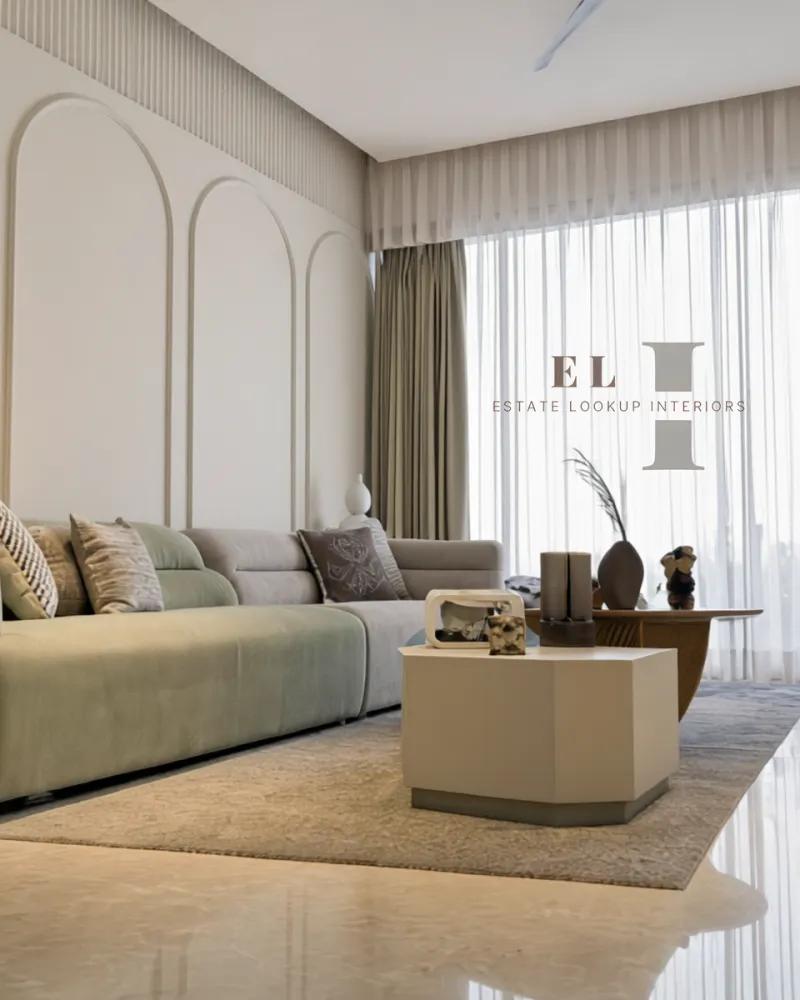
Photo: Estate Lookup Interiors, CC0, via Wikimedia Commons
The mythology of the great American estate has always rested on a particular idea of permanence. These are homes built, the story goes, to endure across generations — to carry the imprint of a single family's taste, values, and ambitions across decades, even centuries. The names attached to the grandest properties in Newport, the Hamptons, and the hills above Bel Air are inseparable from their architecture.
But a quietly significant shift is underway among the country's most financially sophisticated buyers, and it is beginning to reshape how the finest residential properties in America are conceived, constructed, and ultimately transferred.
A New Kind of Luxury Buyer
The ultra-high-net-worth individual of 2024 does not necessarily share the generational assumptions of their predecessors. Across the top tier of the residential market, a growing segment of buyers approaches property acquisition with the same disciplined horizon-thinking they apply to any other asset class. They intend to live extraordinarily well — to inhabit a property with genuine commitment and aesthetic engagement — for a defined period, typically somewhere between five and twelve years, before transitioning to something that better reflects the next chapter of their lives.
This is not a failure of attachment. It is, in many respects, a more honest relationship with what luxury real estate actually represents: a significant, appreciating asset that should be managed with intelligence as well as passion.
The implications for design, however, are profound. A home built to express one owner's singular vision — their specific art collection, their particular preference for Venetian plaster in a very particular shade, their bespoke millwork scaled to their own proportions — is, by definition, a home that asks its next owner to either accept or erase that vision. Neither outcome is ideal. The former constrains; the latter destroys value.
Modular Luxury: A Contradiction Resolved
The architectural response to this challenge has given rise to what practitioners are beginning to describe as transitional luxury design — a discipline that demands all the craft and material quality of the finest permanent estate work, delivered through a spatial and structural logic that gracefully accommodates change.
At the foundation of this approach is a distinction between what architects call the fixed bones and the expressive layer. The fixed bones — structural systems, mechanical infrastructure, the proportions and volumes of principal rooms — are designed and executed to the highest possible standard, with materials and craftsmanship that will appreciate over time and appeal across aesthetic preferences. Stone floors of exceptional quality, plaster walls finished to museum-grade smoothness, millwork details that are beautiful in their restraint rather than idiosyncratic in their specificity: these are the elements that transcend individual taste.
The expressive layer, by contrast, is designed from the outset for eventual removal or replacement. Custom cabinetry is fabricated to precise tolerances but anchored with systems that allow clean extraction without damage to the underlying structure. Built-in furnishings are conceived as components rather than permanent fixtures. Wall treatments in secondary rooms are applied over substrates designed to accept future finishes without remediation. Even certain lighting systems are specified with future owners in mind, using infrastructure flexible enough to accommodate entirely different fixture selections.
The result is an estate that feels, to its current occupant, as fully realized and personally expressive as any bespoke commission — while containing, beneath that expression, an architecture of considered neutrality.
What This Means for Resale Value
The financial logic of this approach is becoming increasingly persuasive to buyers and their advisors alike. Properties designed with transitional principles in mind tend to retain and build value more reliably than those whose character is inseparable from a single owner's taste, however refined that taste may be.
Buyers at the top of the market are sophisticated enough to recognize when a property's personality is an asset and when it is an obstacle. A home that presents the next owner with a blank canvas of exceptional quality — rather than a dominant aesthetic statement requiring either acceptance or costly removal — commands a broader pool of qualified interest and, consequently, stronger pricing dynamics.
Several notable transactions in the past two years have illustrated this principle concretely. Properties in Aspen, Palm Beach, and the East Bay hills that were designed or thoughtfully renovated with transitional principles in mind moved significantly more quickly, and at more favorable terms, than comparable estates whose idiosyncratic finishes required prospective buyers to factor in substantial renovation budgets before they could imagine themselves in residence.
The Philosophical Dimension
Beyond the financial, there is something worth examining in what this trend reveals about how a certain class of American buyer now understands their relationship to place.
The traditional luxury estate was, among other things, an act of declaration — a statement about who one was, what one valued, and how one wished to be remembered. Its permanence was part of its meaning. The transitional estate, by contrast, reflects a different but equally coherent set of values: the primacy of lived experience over legacy, the preference for optionality over entrenchment, the understanding that a life well-lived moves through many chapters and that one's home should be capable of doing the same.
This is not, it should be said, a diminishment of commitment to quality. The buyers commissioning these estates are not cutting corners in anticipation of departure. They are, if anything, more demanding in their specifications precisely because they understand that enduring quality — in materials, in spatial proportion, in structural integrity — is the one thing that truly transcends individual ownership.
To build a great estate for a decade of extraordinary living, and to leave it better than one found it: there is, in that ambition, a form of stewardship that the finest residential architecture has always aspired to, whatever the timeline.