A House Within the Estate: The Case for the Fully Independent Guest Pavilion
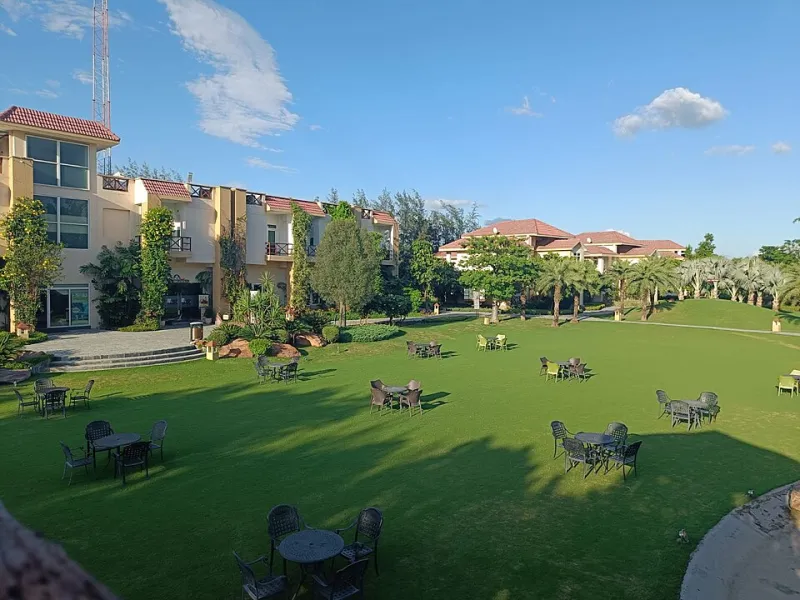
Photo: Resortdecoracao, CC BY-SA 4.0, via Wikimedia Commons
The guest house has long been the estate’s most underused building. It was often a charming afterthought: a bedroom, a bath, perhaps a small sitting room, and a clear message that visitors were welcome but not entirely independent. In 2026, that model is giving way to something more ambitious. The new guest pavilion is a complete residence in miniature—or, in some cases, not miniature at all.
What Independence Actually Requires
A true guest pavilion must function without leaning on the main house. That means a full kitchen or kitchenette with proper refrigeration and dishwashing, laundry facilities, independent heating and cooling, dedicated water and power service, and a private entrance that does not require walking through the primary residence. High-speed connectivity and separate security controls are equally important.
Buyers who intend to host family for months rather than weekends should also examine storage, trash service, package delivery, and parking. Independence is not a single feature; it is a system of small conveniences that allow guests to live normally without becoming a daily management task for the host.
The Multigenerational Imperative
Much of the demand is driven by multigenerational living. Adult children returning home, aging parents who want proximity without loss of autonomy, and long-term staff all require spaces that offer privacy and dignity. The guest pavilion answers that need without forcing everyone under one roof.
Accessibility is a central consideration. Single-level layouts, wide doorways, roll-in showers, and gentle approaches to outdoor areas are no longer niche requests. The best pavilions are designed to serve a range of ages and abilities without feeling clinical.
Designing for Hosting Without Hosting Duty
The post-pandemic hosting habit has strengthened the case for self-sufficiency. Homeowners who entertain frequently want guests to feel cared for, but they also want the freedom to work, travel, or simply retire early. A well-planned pavilion allows both.
Architects are responding with compact but complete service zones: a small pantry, a coffee station, a washer and dryer, and a comfortable outdoor room. Keyless entry and smart controls let guests come and go without a handoff of keys. Shared amenities—pool, garden, gym—remain nearby, but the pavilion can stand alone when needed.
The Buyer’s Checklist
For buyers considering an estate with a guest pavilion, due diligence should go beyond square footage. Check zoning and permitting for independent living, utility metering, insurance classification, and any restrictions on rental use. Review the building’s envelope and mechanical systems as carefully as the main house.
Sightlines and acoustics matter as well. A pavilion that is visually connected but acoustically separate offers the best of both worlds. Parking and path lighting should allow late arrivals without disturbing the main residence. Resale value depends on flexibility: a structure that can serve as a guest house, staff quarters, a wellness suite, or a private studio will appeal to the widest range of future buyers.
When the Pavilion Becomes an Asset
The fully independent guest pavilion is ultimately a hedge against change. Families grow, households contract, and hosting patterns shift. A building designed with its own kitchen, entrance, and infrastructure can adapt to each season of ownership.
In America’s finest estates, the guest house has grown up. It is no longer a courtesy building at the edge of the property. It is a considered residence in its own right—and, increasingly, a requirement for buyers who expect every part of an estate to perform at the highest level.